The Old Mosque, Tarsus — a Crusader church transformed into a minaret of the East
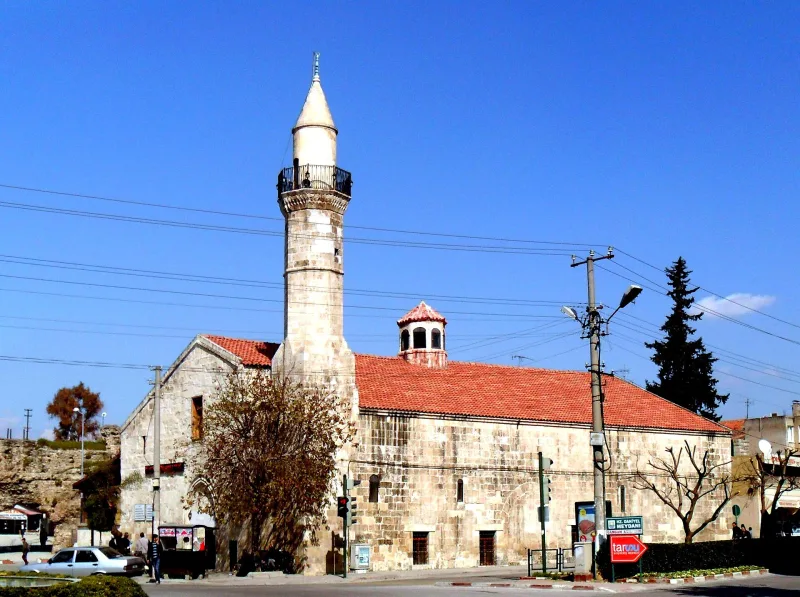
In the very heart of Old Tarsus, on the main street of the ancient city, stands a building in which a millennium of history is condensed into a single facade. The Old Mosque of Tarsus is a former church built in 1102 during the First Crusade, when the Normans recaptured the city from the Seljuks. Legend has it that the church was dedicated to the Apostle Paul—a native of Tarsus and one of the principal apostles of Christianity. In 1415, Ahmet Bey of the Ramazanoğlu dynasty converted the church into a mosque, giving the building a second spiritual life. The Old Mosque in Tarsus, or Kilise Cami—"Church Mosque"—still preserves frescoes on its ceiling depicting Jesus and the four evangelists: a silent testimony to the life that once existed here.
History and Origin of the Old Mosque, Tarsus
Tarsus is one of the oldest cities in Asia Minor, located in the province of Mersin on the Mediterranean coast of southern Turkey. Over the millennia, it passed from hand to hand: Achaemenid Persia, Hellenism, Rome, Byzantium, the Arab caliphates, the Armenian Kingdom of Cilicia, the Seljuks, the Crusaders, the Ramazanoğlu, the Mamluks, and the Ottoman Empire. Each of these rulers left their mark on the city’s fabric, and the building of the present-day Old Mosque is a living embodiment of these layers.
In 1102, when the city was under the control of the First Crusade’s forces, a church was erected on this site. According to legend, it was consecrated in the name of Saint Paul—who was born in Tarsus itself. It should be noted that this church should not be confused with another Tarsus landmark—the 19th-century Church of St. Paul, which is often mistaken for the same structure.
A notable event took place in 1198: at that time, Tarsus was part of the Armenian Kingdom of Cilicia. In this very church, the first Armenian king, Levon I of the Rubenid dynasty, was crowned—Cardinal Konrad von Wittelsbach, representing the Pope, placed the crown upon his head on behalf of the Holy See.
In 1359, Tarsus passed to the Turkish Ramazanoğlu dynasty, and in 1415, the ruler Ahmet Bey (reigned 1383–1416) converted the church into a mosque, adding a minaret. The building has been known by several names: Eski Cami (“Old Mosque”), Kilise Camii (“Church Mosque”), and Baytemür Camii. Documented restorations took place in 1868 and 1900; the most recent renovation was completed in 2007.
Architecture and What to See
The Old Mosque in Tarsus covers an area of 460 square meters, including the adjacent courtyard. The interior dimensions of the building are 19.3 × 17.5 meters; the width of the nave is 12.6 meters. It is a relatively small but richly detailed structure that clearly reflects its Gothic origins.
Facade and Entrance
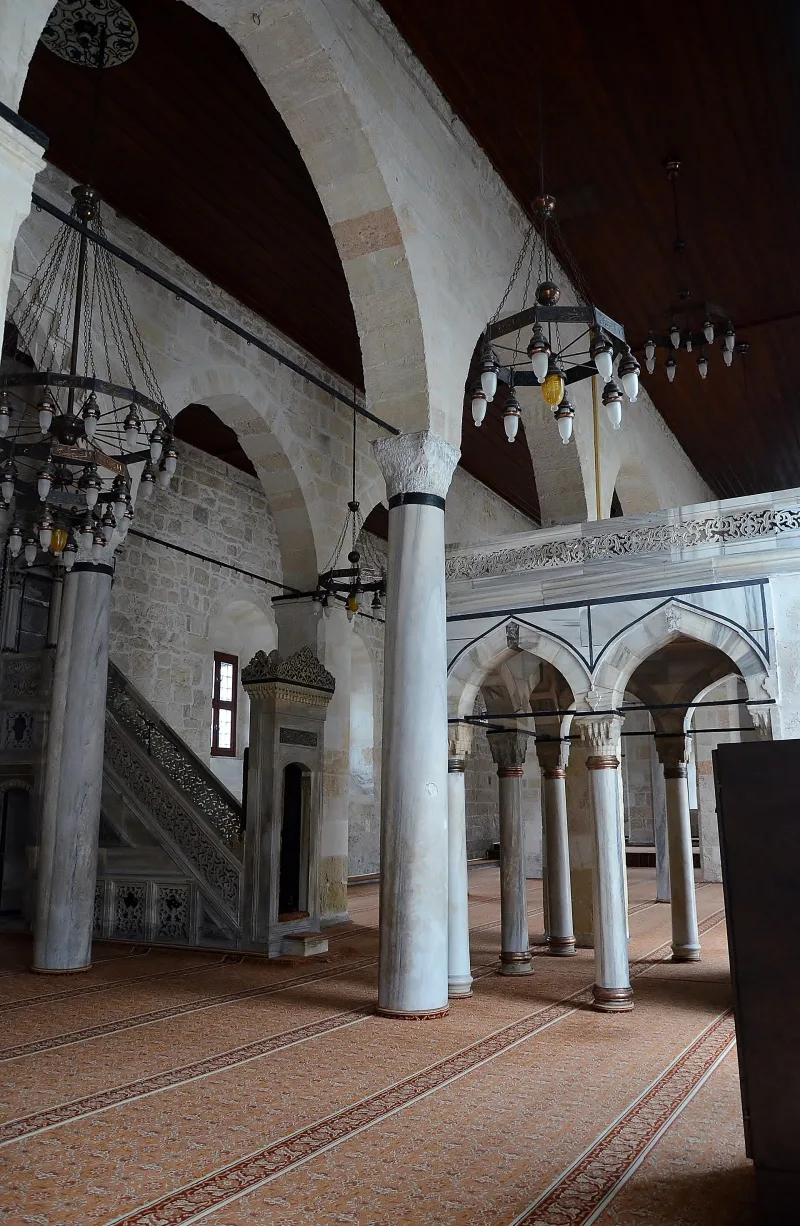
The main entrance is located on the west side. The façade is decorated with blind arches—relief arched niches without openings: a characteristic element of Gothic architecture. At the entrance are two alabaster half-columns. Granite half-columns are located on the south and north walls of the nave; they were likely made from building materials salvaged from earlier structures that once stood here.
Roof and Structure
Externally, the building is covered by a gable roof—not a dome. This is a surviving feature of the original Gothic basilica: the Crusaders built according to Western European canons, where hipped and gable roofs were the norm.
Ceiling frescoes
The main historical value of the interior lies in the ceiling frescoes. Jesus Christ is depicted in the central part of the ceiling; flanking him are the four evangelists: John and Matthew to the east, Mark and Luke to the west. These paintings are a direct legacy of church life in the 12th–14th centuries. The fact that they survived the conversion of the church into a mosque is a true rarity and a historically significant precedent of the coexistence of Christian and Muslim heritage in a single space.
Minaret and Bell Tower
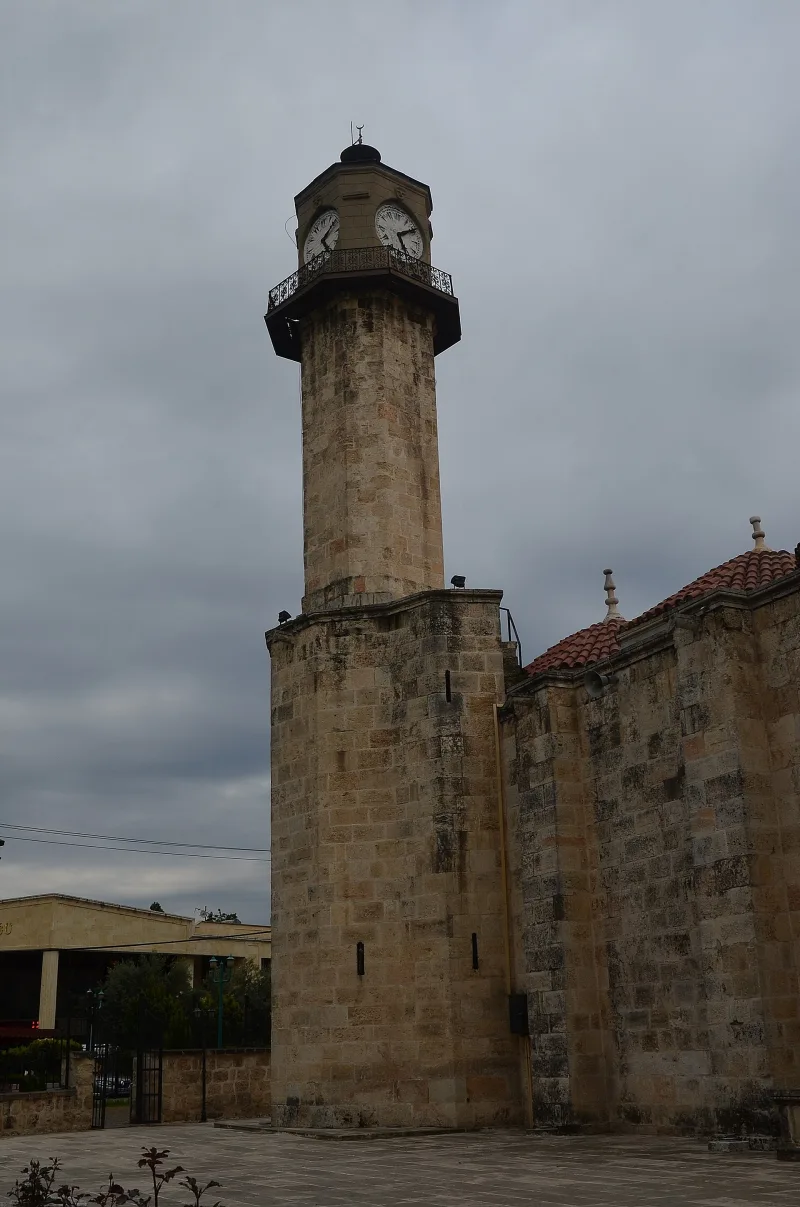
The building has two vertical focal points: the minaret in the southwest corner—an addition from the Ramazanoğlu era—and the old bell tower in the northeast corner—a relic of the church’s history. The duality of these two towers creates a tangible image of the building’s spiritual history.
Mihrab and Adaptation to Islamic Culture
A mihrab—a niche that guides worshippers toward Mecca—was added to the south wall. Thus, the building acquired a layout characteristic of an “ulu cami” (cathedral mosque), while retaining its original rectangular structure.
Interesting Facts and Legends
- In 1102, when the church was built, Tarsus was part of the First Crusade’s territory. The Norman troops of Tancred of Galilee occupied part of Cilicia; the presence of the Crusaders explains the Gothic character of the architecture—which has Western European roots.
- In 1198, the coronation of Levon I—the first king of the Armenian Kingdom of Cilicia—took place in this building. Cardinal Conrad von Wittelsbach, Archbishop of Mainz, placed the crown upon his head on behalf of the pope, and later the German emperor also sent a symbolic crown. This coronation transformed the Armenian state into a recognized European kingdom.
- The building combines Christian and Islamic elements that were not destroyed but coexist: Gothic arches, granite columns, ceiling frescoes depicting Christ and the Evangelists—and a mihrab, a minaret, and a functioning mosque. Such an overlap of eras is an architectural rarity.
- The name “Baytemür Camii,” found in historical sources, may be linked to the name of the person who oversaw one of the restorations. The exact origin of this name has not yet been determined.
- The mosque is located within walking distance of other historical monuments in Tarsus: the 19th-century Church of St. Paul, St. Paul’s Well, and other sites associated with the city’s apostolic heritage.
How to get there
Tarsus is located 30 kilometers east of Mersin and 65 kilometers west of Adana. The nearest airport is Adana (ADA). Regular buses and minibuses run from Adana to Tarsus; the trip takes about 45 minutes. From Mersin, it takes approximately 30–40 minutes by bus or dolmuş.
The mosque is located in the center of Tarsus, on the main historic street. GPS: 36.9178° N, 34.8978° E. It is about a 15-minute walk from the Tarsus bus station. Most of Tarsus’s attractions are within walking distance, so once you arrive in the center, you can visit them all without needing additional transportation.
Tips for travelers
The mosque is open to visitors daily, and admission is free. Tourists are advised to visit outside of prayer times—this will allow you to explore the interior at your leisure and examine the ceiling frescoes. Women must wear a headscarf; shoes must be removed at the entrance.
Bring a flashlight or use your phone’s flashlight—the lighting inside is quite dim, and the ceiling frescoes require good light for a detailed view. A wide-angle lens or the “wide-angle” mode on your smartphone will help capture the entire interior space.
While in Tarsus, be sure to visit the nearby landmarks: St. Paul’s Church (Aziz Pavlus Kilisesi) with the Apostle’s Well, the Roman Cleopatra Gate, and the Tarsus Şelalesi waterfall cascade within the city limits. Tarsus is the birthplace of the Apostle Paul, so the entire historic district is steeped in biblical associations. For a more in-depth exploration, it’s best to set aside a full day. The Old Mosque in Tarsus is a rare monument where a Gothic basilica, an Armenian coronation site, and an Islamic place of worship are all combined in a single space, making it one of the most multifaceted historical sites in the entire Mediterranean region of Turkey.